
The Situation
A commercial distribution facility had operated successfully for many years under an aging low-slope roofing system. Although the roof continued to provide basic protection, maintenance records showed an increasing number of localized repairs following seasonal storms. Facility managers also noted recurring concerns around flashing details, rooftop equipment penetrations, and drainage performance.
Rather than waiting for a major roofing failure, ownership elected to commission a comprehensive roof evaluation. The goal was straightforward: determine whether continued repairs remained practical or whether a complete single-ply roofing system would provide better long-term value.
| Before Installation | After Installation |
|---|---|
| Recurring localized repairs. | Integrated roofing system. |
| Inconsistent maintenance planning. | Structured maintenance strategy. |
| Aging waterproof details. | Modern flashing and membrane protection. |
| Growing uncertainty about roof condition. | Documented long-term roof performance plan. |
The Challenge
The building remained fully operational throughout the project, making continuity a top priority. Roofing work needed to be coordinated carefully so that normal business activities could continue while construction progressed safely and efficiently.
In addition to replacing the aging roofing surface, the project team evaluated drainage, flashing transitions, rooftop penetrations, insulation performance, and the interaction between the roofing system and existing mechanical equipment. The objective extended beyond installing a new membrane—it involved improving the performance of the complete roofing assembly.
Project Timeline
- Phase 1: Comprehensive roof assessment and project planning.
- Phase 2: Preparation of the existing roofing system.
- Phase 3: Installation of insulation, flashing, and single-ply membrane.
- Phase 4: Final inspection and long-term maintenance planning.
The Solution
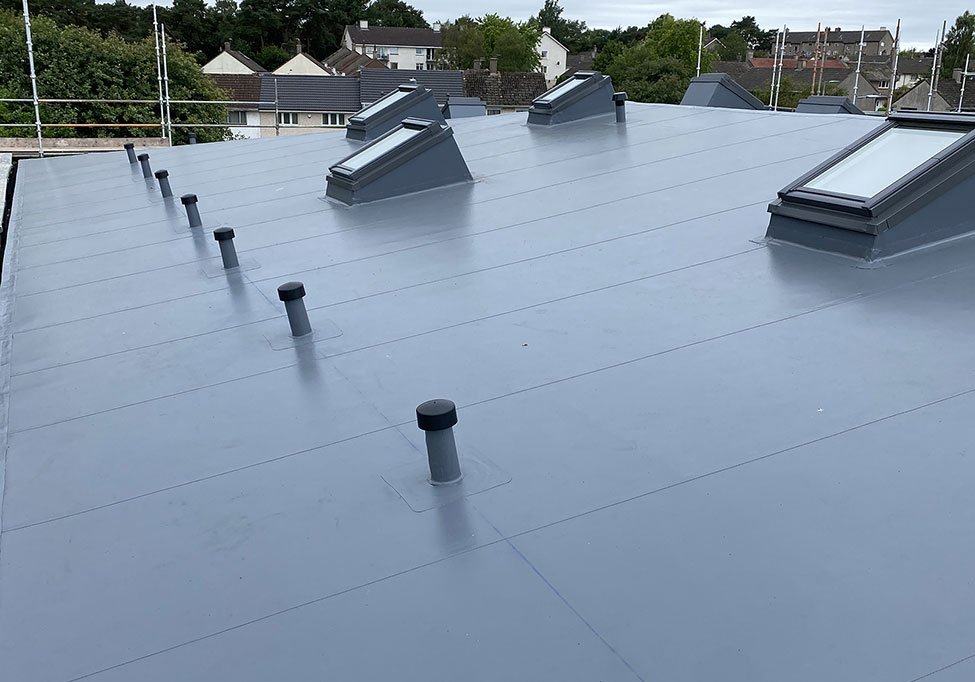
The selected roofing strategy focused on creating a durable, integrated single-ply roofing system that addressed both existing concerns and future maintenance objectives. Construction was completed in carefully planned stages, allowing the facility to remain operational while each section of the roof was systematically upgraded.
Attention was given to membrane installation, flashing integration, drainage performance, rooftop penetrations, and quality-control inspections throughout the project. Rather than treating each element independently, every component was installed as part of a unified roofing system designed for long-term reliability.
The Results
Following installation, the building benefited from a modern roofing system designed to support long-term performance rather than repeated corrective repairs. While no roofing project can eliminate the need for future maintenance, the new single-ply system established a stronger foundation for predictable inspections, simplified servicing, and improved waterproof protection.
Facility managers also gained something equally valuable: confidence. Instead of responding to recurring concerns after severe weather, they now had a documented roofing system supported by planned inspections and preventive maintenance. That proactive approach allows future decisions to be based on routine evaluations rather than unexpected problems.
Metrics Summary
- ✓ Roofing system upgraded to a modern single-ply assembly.
- ✓ Preventive maintenance plan established for long-term performance.
- ✓ Improved consistency in drainage and waterproofing details.
- ✓ Better documentation for future inspections and maintenance.
- ✓ Greater confidence in long-term operational reliability.
| Project Objective | Outcome |
|---|---|
| Improve waterproof protection | Integrated membrane and flashing system installed. |
| Support ongoing operations | Installation completed with phased project planning. |
| Reduce reactive maintenance | Preventive inspection strategy established. |
| Extend roofing performance | Long-term maintenance roadmap created. |
Key Lessons
This project highlights an important principle in commercial roofing: successful outcomes begin with informed decisions rather than emergency reactions. A comprehensive evaluation made it possible to identify the roof’s actual condition, compare practical options, and select a solution that supported the building’s long-term operational goals.
Another valuable lesson was the importance of viewing the roof as a complete system. Membranes, insulation, flashing, drainage components, and rooftop penetrations all work together. Improving one element while ignoring another rarely produces the same long-term results as an integrated roofing approach.
Organizations working with experienced Single Ply Roofing Specialists often benefit from this broader perspective. Instead of focusing solely on installation, they receive guidance that supports maintenance planning, future inspections, and lifecycle management for the entire roofing system.
Protect Your Commercial Property with Confidence
This case study demonstrates that a successful single-ply roof installation is about much more than replacing roofing materials. It is a strategic investment in building reliability, operational continuity, and long-term asset protection. Careful planning, quality workmanship, and ongoing maintenance all contribute to a roofing system that continues delivering value long after construction has been completed.
For commercial property owners, the greatest return often comes from proactive decision-making. Addressing roofing needs before they become emergencies allows projects to be completed under controlled conditions, supporting both the building and the business it protects for many years to come.